
SoftBank developing AI agents to make each worker like a ‘thousand-armed deity’
SoftBank boss Son Masayoshi said on Wednesday that his team is working on a first-of-its-kind system in which AI agents will be able to self-replicate

Google’s Pixel Buds wireless earbuds have offered a fantastic real-time translation facility for a while now. Over the past few years, brands such as Timkettle have offered similar earbuds for business customers. However, all these solutions can only handle one audio stream at once for translation.
The folks over at the University of Washington (UW) have developed something truly remarkable in the form of AI-driven headphones that can translate the voice of multiple speakers at once. Think of it as a polyglot in a crowded bar, able to understand the speech of people around him, speaking in different languages, all at once.
The team is referring to their innovation as a Spatial Speech Translation, and it comes to life courtesy of binaural headphones. For the unaware, binaural audio tries to simulate sound effects just the way human ears perceive them naturally. To record them, mics are placed on a dummy head, apart at the same distance as human ears on each side.
The approach is crucial because our ears don’t only hear sound, but they also help us gauge the direction of its origin. The overarching goal is to produce a natural soundstage with a stereo effect that can provide a live concert-like feel. Or, in the modern context, spatial listening.
The work comes courtesy of a team led by Professor Shyam Gollakota, whose prolific repertoire includes apps that can put underwater GPS on smartwatches, turning beetles into photographers, brain implants that can interact with electronics, a mobile app that can hear infection, and more.
“For the first time, we’ve preserved the sound of each person’s voice and the direction it’s coming from,” explains Gollakota, currently a professor at the institute’s Paul G. Allen School of Computer Science & Engineering.

The team likens their stack to a radar, as it kicks into action by identifying the number of speakers in the surroundings, and updating that number in real-time as people move in and out of the listening range. The whole approach works on-device and doesn’t involve sending user voice streams to a cloud server for translation. Yay, privacy!
In addition to speech translation, the kit also “maintains the expressive qualities and volume of each speaker’s voice.” Morever, directional and audio intensity adjustments are made as the speaker moves across the room. Interestingly, Apple is also said to be developing a system that allows the AirPods to translate audio in real-time.
The UW team tested the AI headphones’ translation capabilities in nearly a dozen outdoor and indoor settings. As far as performance goes, the system can take, process, and produce translated audio within 2-4 seconds. Test participants appeared to prefer a delay worth 3-4 seconds, but the team is working to speed up the translation pipeline.
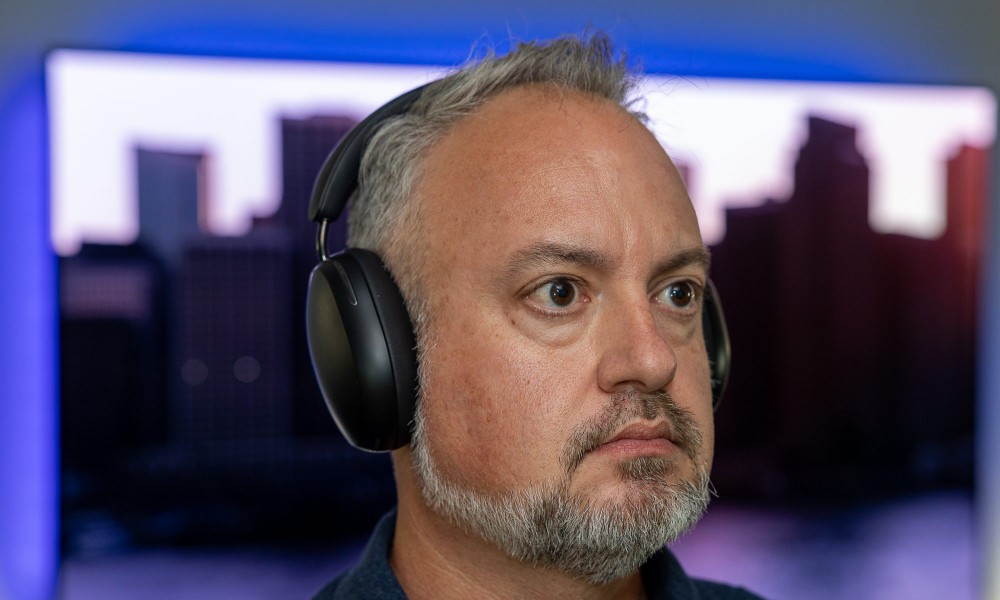
So far, the team has only tested Spanish, German, and French language translations, but they’re hopeful of adding more to the pool. Technically, they condensed blind source separation, localization, real-time expressive translation, and binaural rendering into a single flow, which is quite an impressive feat.
As far as the system goes, the team developed a speech translation model capable of running in real-time on an Apple M2 silicon, achieving real-time inference. Audio duties were handled by a pair of Sony’s noise-cancelling WH-1000XM4 headphones and a Sonic Presence SP15C binaural USB mic.
And here’s the best part. “The code for the proof-of-concept device is available for others to build on,” says the institution’s press release. That means the scientific and open-source tinkering community can learn and base more advanced projects on the foundations laid out by the UW team.

SoftBank boss Son Masayoshi said on Wednesday that his team is working on a first-of-its-kind system in which AI agents will be able to self-replicate

GPT-5, the next major upgrade to OpenAI’s ChatGPT AI model, has finally arrived, bringing with it new capabilities that push the AI model further forw
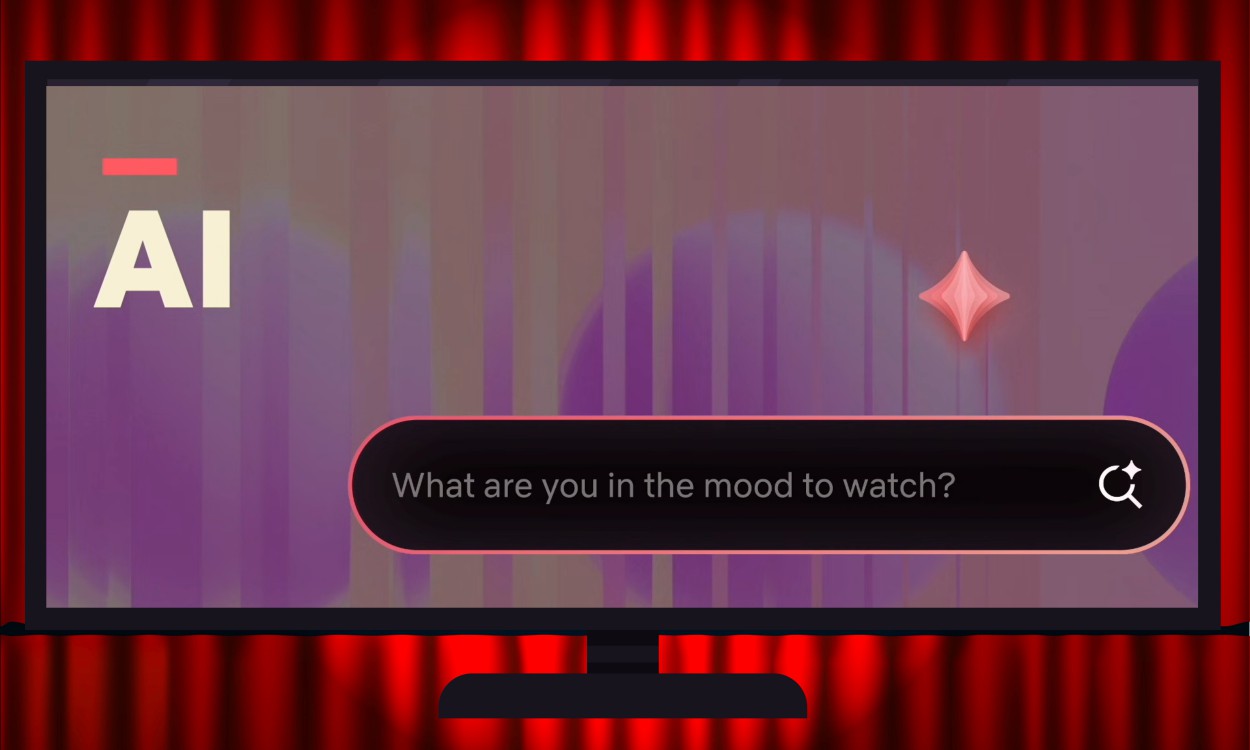
When you think of AI, names like Google, Microsoft, and OpenAI pop up in your mind. Netflix, the world’s biggest streaming platform, doesn’t quite sou

Samsung’s Project Moohan XR headset has grabbed all the spotlights in the past few months, and rightfully so. It serves as the flagship launch vehicle
OpenAI’s ChatGPT tool has found widespread adoption, from assisting with academic work and domain-specific deep research to speeding up drug discovery
Google has announced a wide range of upgrades for its Gemini assistant today. To start, the new Gemini 2.0 Flash Thinking Experimental model now allow
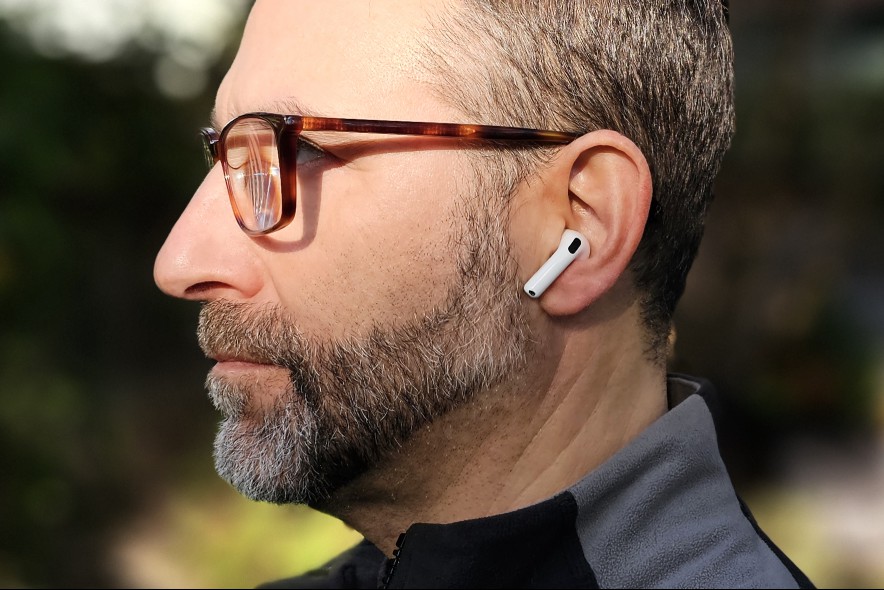
Apple has lately focused on giving the AirPods more of a wellness-focused makeover than hawking them as plain wireless earbuds. Late last year, the Ai
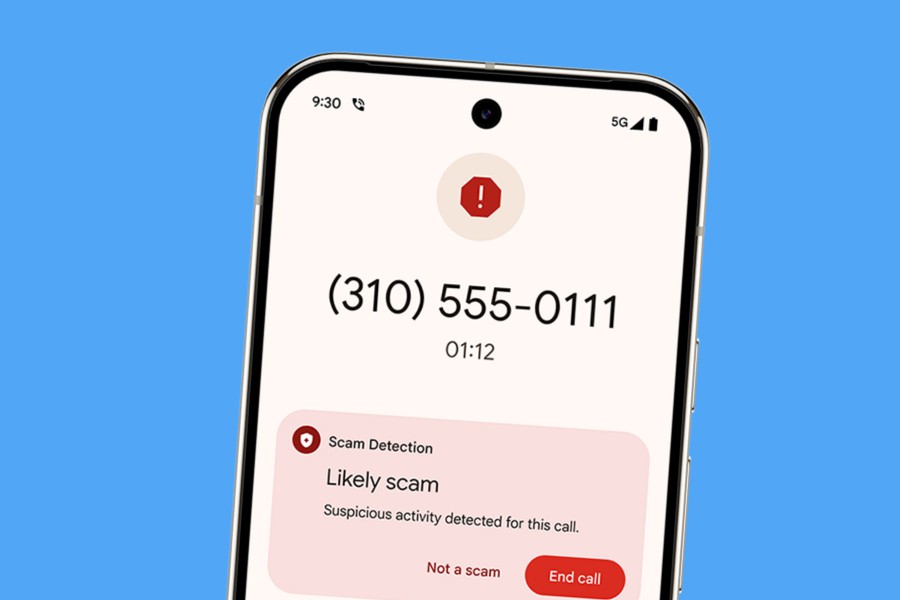
Over three months ago, Google started beta testing a new safety feature for Pixel phones that can sense signs of a fraud in voice calls using AI analy
We are a comprehensive and trusted information platform dedicated to delivering high-quality content across a wide range of topics, including society, technology, business, health, culture, and entertainment.
From breaking news to in-depth reports, we adhere to the principles of accuracy and diverse perspectives, helping readers find clarity and reliability in today’s fast-paced information landscape.
Our goal is to be a dependable source of knowledge for every reader—making information not only accessible but truly trustworthy. Looking ahead, we will continue to enhance our content and services, connecting the world and delivering value.