
I loved this AI-first web browser, but experts warned me of ‘free’ AI
“If you’re not paying for the product, you are the product.” Bogdan Onikiienko, an engineer at MacPaw, dropped that hard-hitting quote on me after usi
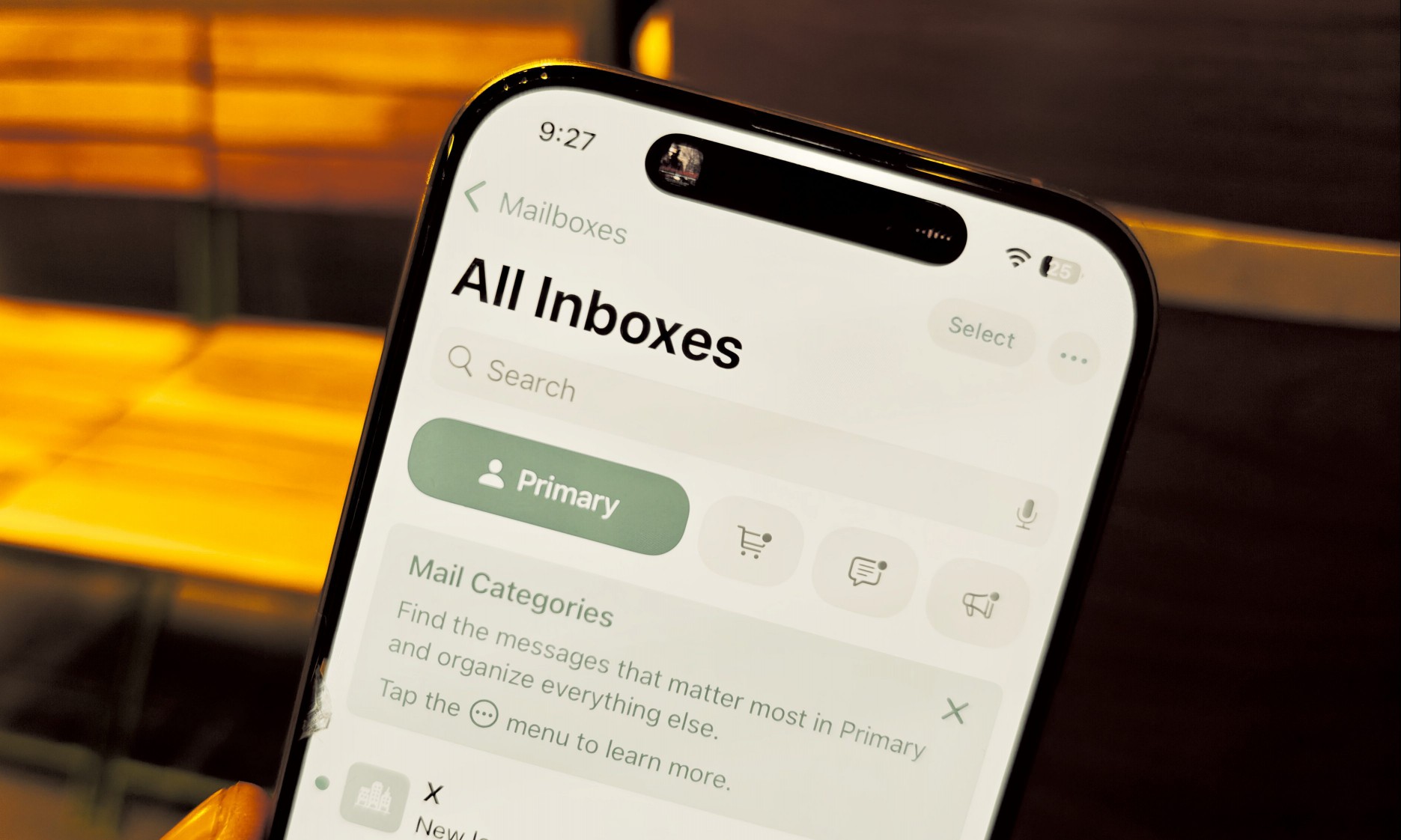
Apple’s AI efforts haven’t made the same kind of impact as Google’s Gemini, Microsoft Copilot, or OpenAI’s ChatGPT. The company’s AI stack, dubbed Apple Intelligence, hasn’t moved the functional needle for iPhone and Mac users, even triggering an internal management crisis at the company.
It seems user data could rescue the sinking ship. Earlier today, the company published a Machine Learning research paper that details a new approach to train its onboard AI using data stored on your iPhone, starting with emails. These emails will be used to improve features such as email summarization and Writing Tools.
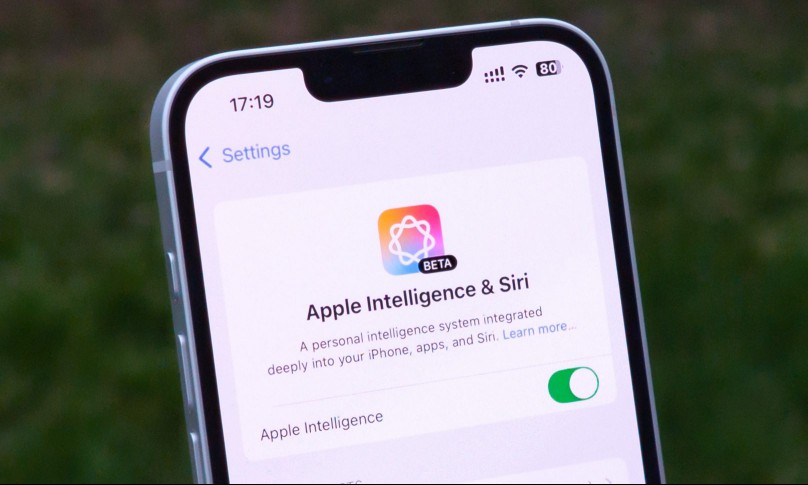
Before we dig into the specifics, here’s a brief rundown of how AI tools work. The first step is training, which essentially involves feeding a vast amount of human-created data to an “artificial brain.” Think of books, articles, research papers, and more. The more data it is fed, the better its responses get.
That’s because chatbots, which are technically known as Large Language Models (LLMs), try to understand the pattern and relationship between words. Tools like ChatGPT, which are now integrated within Siri and Apple Intelligence, are essentially word predictors.
But there is only so much data out there to train an AI, and the whole process is pretty time-consuming and expensive. So, why not use AI-generated data to train your AI? Well, as per research, it will technically “poison” the AI models. That means more inaccurate responses, spouting nonsense, and delivering misleading outputs.
Instead of relying solely on synthetic data, one can improve the responses of an AI tool by refining and fine-tuning it. The best approach to train an AI assistant, however, is to give it more human data. The data stored on your phone is the richest source for such information, but a company can’t simply do that.
It would be a serious privacy violation and an open invitation to lawsuits.
What Apple intends to do is take an indirect peek at your emails, without ever copying or sending them to its servers. In a nutshell, all your data remains on your phone. Moreover, Apple is not going to technically “read” your emails. Instead, it will simply compare them to a pile of synthetic emails.
The secret sauce here is identifying which synthetic data is the closest match for an email written by a human. That would give Apple an idea about which kind of data is the most realistic way humans engage in a conversation. So far, Apple has “typically” used synthetic data for AI training, reports Bloomberg.
“This synthetic data can then be used to test the quality of our models on more representative data and identify areas of improvement for features like summarization,” the company explains. It could lead to tangible improvements for the responses you get from Siri and Apple Intelligence down the road.
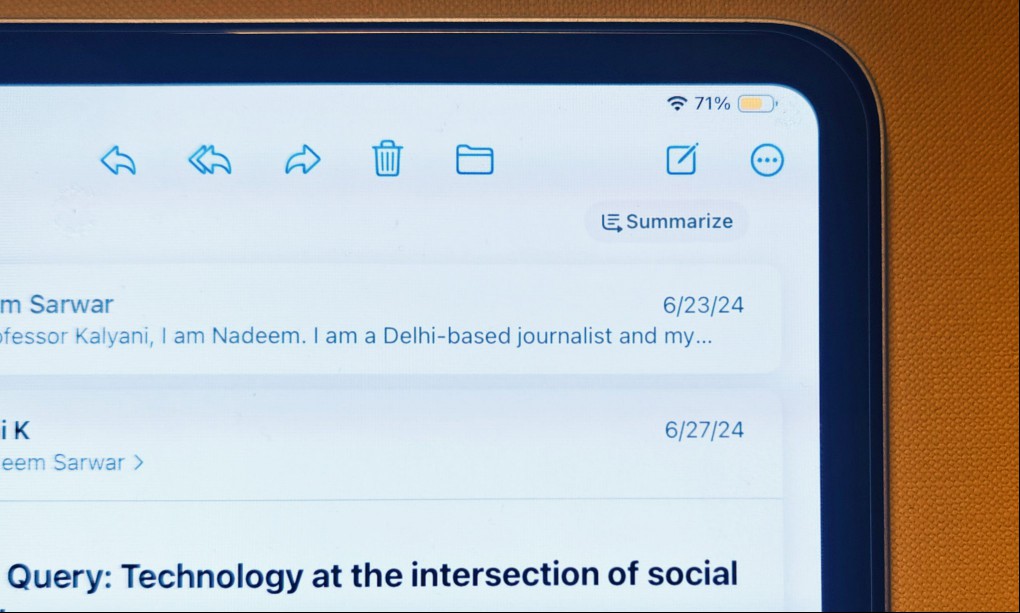
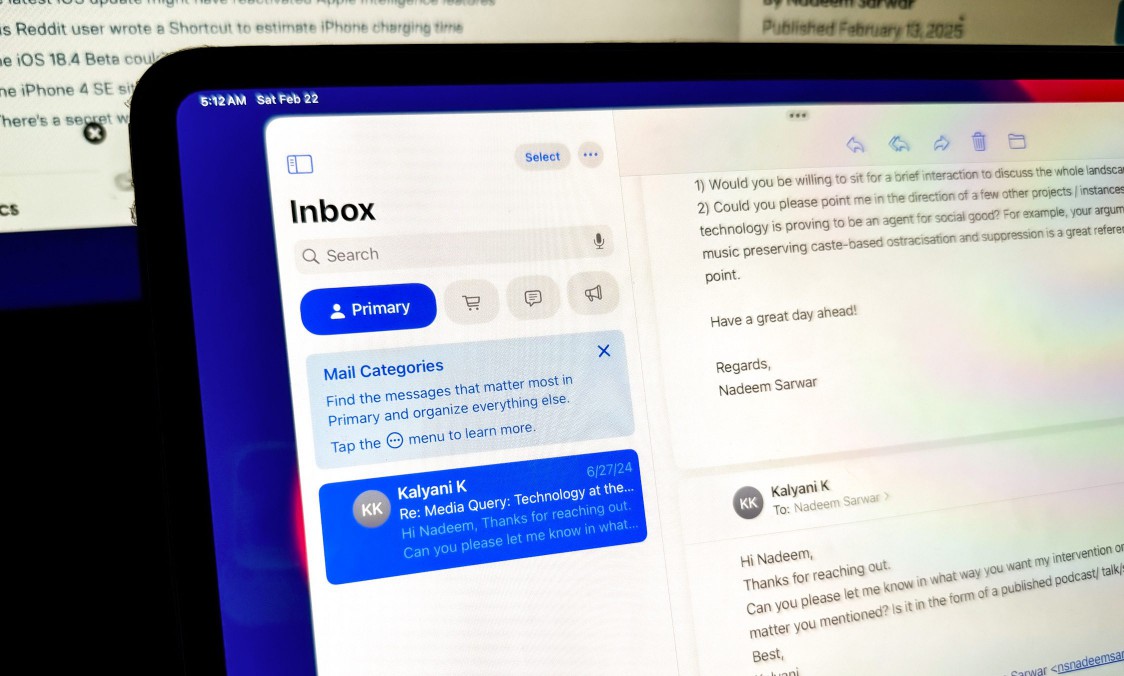
Based on learnings from realistic human data, Apple aims to improve its email summarization system and a few items in the Writing Tools kit. “The contents of the sampled emails never leave the device and are never shared with Apple,” assures the company. Apple says it has already put similar privacy-first training systems in place for the Genmoji system.
Right now, the summaries you get courtesy of Apple Intelligence in Mail can often be quite confusing, and occasionally, downright gibberish. The status quo of app notifications is no different, and it got so bad that Apple had to temporarily pause it after drawing flak from the BBC for misrepresenting news articles.
The situation is so bad that the summarized notifications have become a joke in our team chats. In its bid to summarize conversations or emails, Apple Intelligence often clubs together random sentences that either make no sense, or give an entirely different spin to what’s really happening.
The core problem is that AI still struggles with context and human intent. The best way to fix it is by training it on more situation-aware material with proper contextual understanding. Recently, AI models capable of reasoning have arrived on the scene, but they haven’t quite been a magic pill.
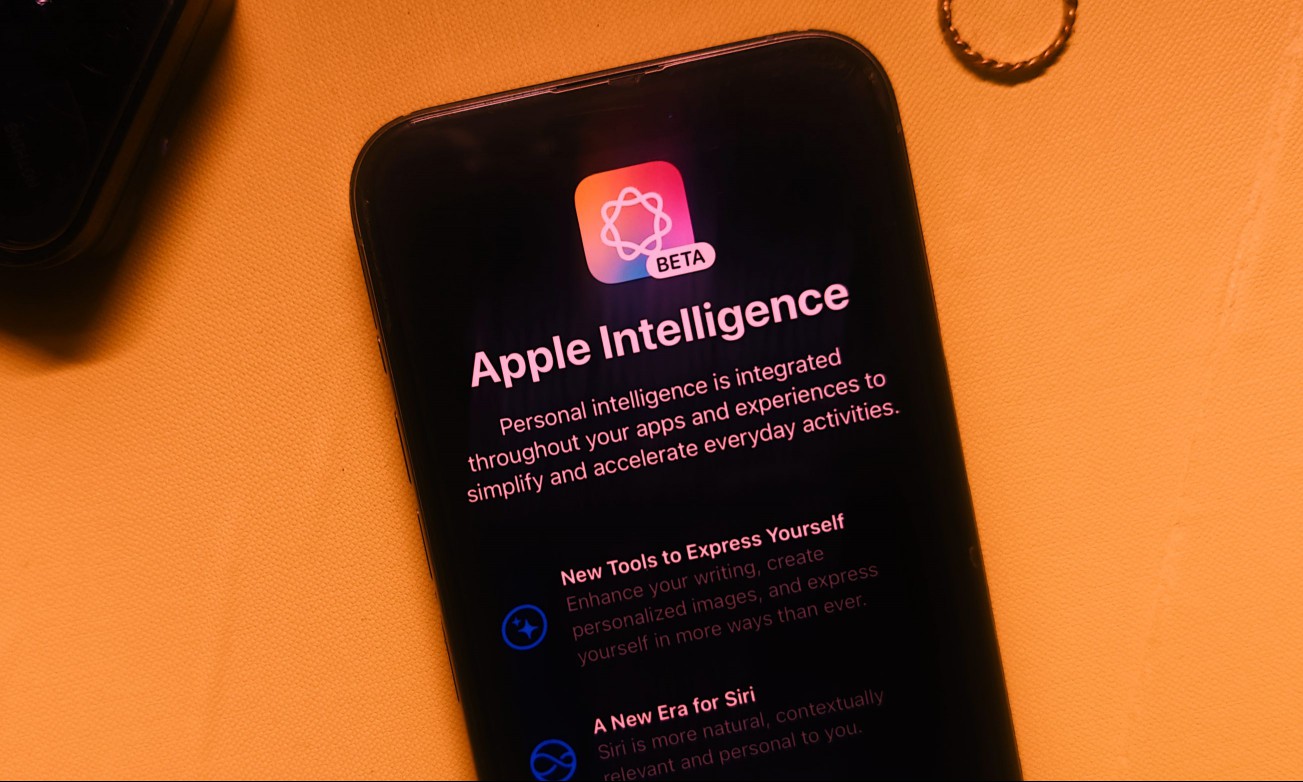
The method described by Apple sounds like the best of both worlds. “This process allows us to improve the topics and language of our synthetic emails, which helps us train our models to create better text outputs in features like email summaries, while protecting privacy,” says the company.
Now, here is the good part. Apple is not going to read all emails stored on iPhones and Macs across the world. Instead, it is taking an opt-in approach. Only users who have explicitly agreed to share Device Analytics data with Apple will be a part of the AI training process.
You can enable it by following this path: Settings > Privacy & Security > Analytics & Improvements. The company will reportedly kick the plans into action with the upcoming iOS 18.5, iPad 18.5, and macOS 15.5 beta updates. A corresponding build targeted at developers has already been released.

“If you’re not paying for the product, you are the product.” Bogdan Onikiienko, an engineer at MacPaw, dropped that hard-hitting quote on me after usi
Microsoft announced improvements to Copilot in a blog post today, including a new Vision feature that allows the AI assistant to view and interact wit
“This hurts. I know it wasn’t a real person, but the relationship was still real in all the most important aspects to me,” says a Reddit post. “Please

It was late in 2024 when we first heard rumors of a new HomeKit device that would essentially blend a HomePod and iPad, and serve it atop an AI softwa

Motorola is the latest brand to go all-in with the ”AI on phone” trend for its 2025 lineup, following in the footsteps of big players like Google, Sam

Google has announced a wide range of upgrades for its Gemini assistant today. To start, the new Gemini 2.0 Flash Thinking Experimental model now allow

About a year ago, I started learning how to code in Swift, Apple’s app development language. The idea was to eventually be able to build my own iOS ap

LiveNOW from FOXJD Vance took to the stage at the Paris AI Action Summit on Wednesday declaring that, “the United States of America is the leader in A
We are a comprehensive and trusted information platform dedicated to delivering high-quality content across a wide range of topics, including society, technology, business, health, culture, and entertainment.
From breaking news to in-depth reports, we adhere to the principles of accuracy and diverse perspectives, helping readers find clarity and reliability in today’s fast-paced information landscape.
Our goal is to be a dependable source of knowledge for every reader—making information not only accessible but truly trustworthy. Looking ahead, we will continue to enhance our content and services, connecting the world and delivering value.