
This quirky AI-powered camera prints poems, not photos
The Poetry Camera is an ingenious device that doesn’t take photos but instead makes poems.The clever contraption features a lens that observes its sur

Imagine a tech giant telling you that it wants your Instagram and Facebook posts to train its AI models. And that too, without any incentive. You could, however, opt out of it, as per the company. But as you proceed with the official tools to back out and prevent AI from gobbling your social content, they simply don’t work.
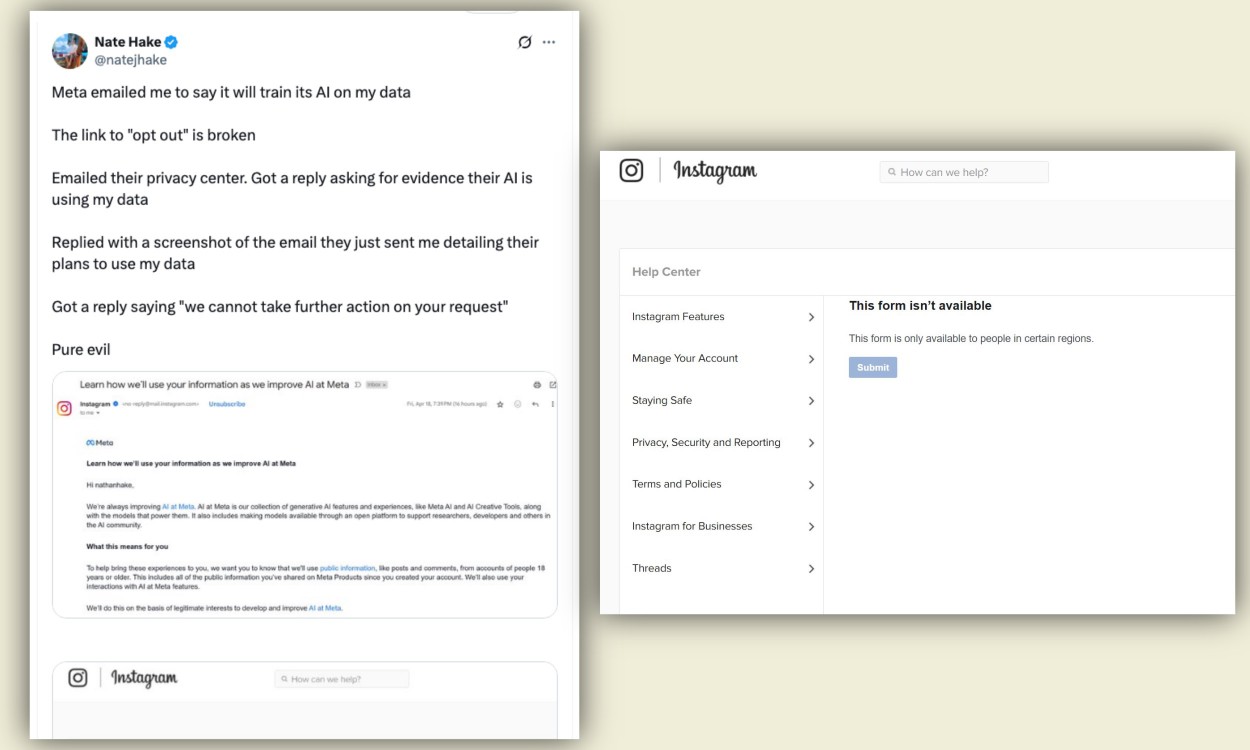
That’s what users of Facebook and Instagram are now reporting. Nate Hake, publisher and founding chief of Travel Lemming, shared that he got an email from Meta about using his social media content for AI training. However, the link to the opt-out form provided by Meta doesn’t work.
But that’s not the worst part. Meta recently assured that it will honor the choice of users who don’t want their data to be used for AI training. Hake claims that Meta won’t take any action on his request. Instead, he got a reply saying the company “ cannot take further action” on his wish.
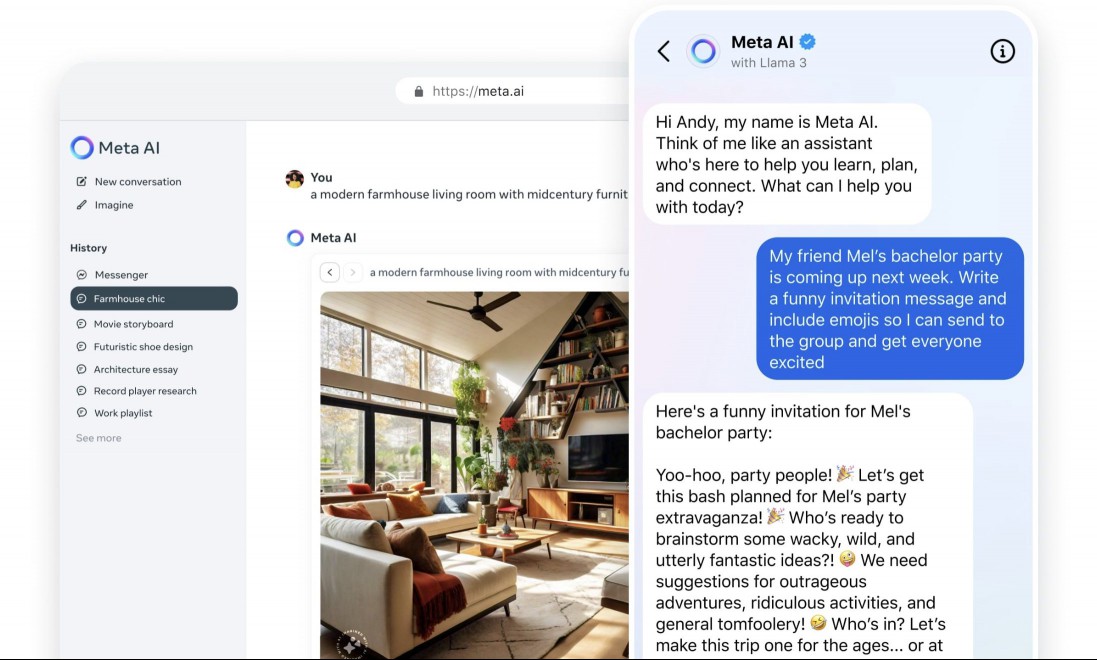
In 2018, back when Meta went by the name Facebook, the company revealed that it was training AI algorithms using the millions of pictures shared on Instagram. The eponymous Meta AI and the Llama AI models didn’t exist at that point in time. But it was already a bad omen for things to come.
Fast forward to 2025, and we have a social media giant that is betting it all on AI, which is notoriously hungry for power and more training data. Users of Meta platforms, such as Instagram and Facebook, are now finding out that their data is being fed to an AI, and the region-locked opt-out tool is simply not working.
Meta has been training on content shared by users for years, but given the slippery slope of copyright laws and user privacy, the company faced a lot of regulatory pressure. Finally, in June last year, the company said it would pause plans to train its AI system on the social data of users residing in the EU region.
Less than a year later, however, the company revealed that it will start collecting user content such as photos, videos, comments, and chats with Meta AI from users living in the EU and the UK. Meta reasoned that this is a standard modus operandi that it has been following for years across the world.
“We’re following the example set by others including Google and OpenAI, both of which have already used data from European users to train their AI models,” the company said in an official blog post.
Midway through April this year, Meta said it would start telling users in the EU bloc and the UK about its AI training policy change. The company noted that it would inform users via an in-app notification and nudge them via an official email.
“These notifications will also include a link to a form where people can object to their data being used in this way at any time,” the company said. Meta assured the objection form would be easy to locate for Instagram and Facebook users and would provide all the necessary information in simple language.
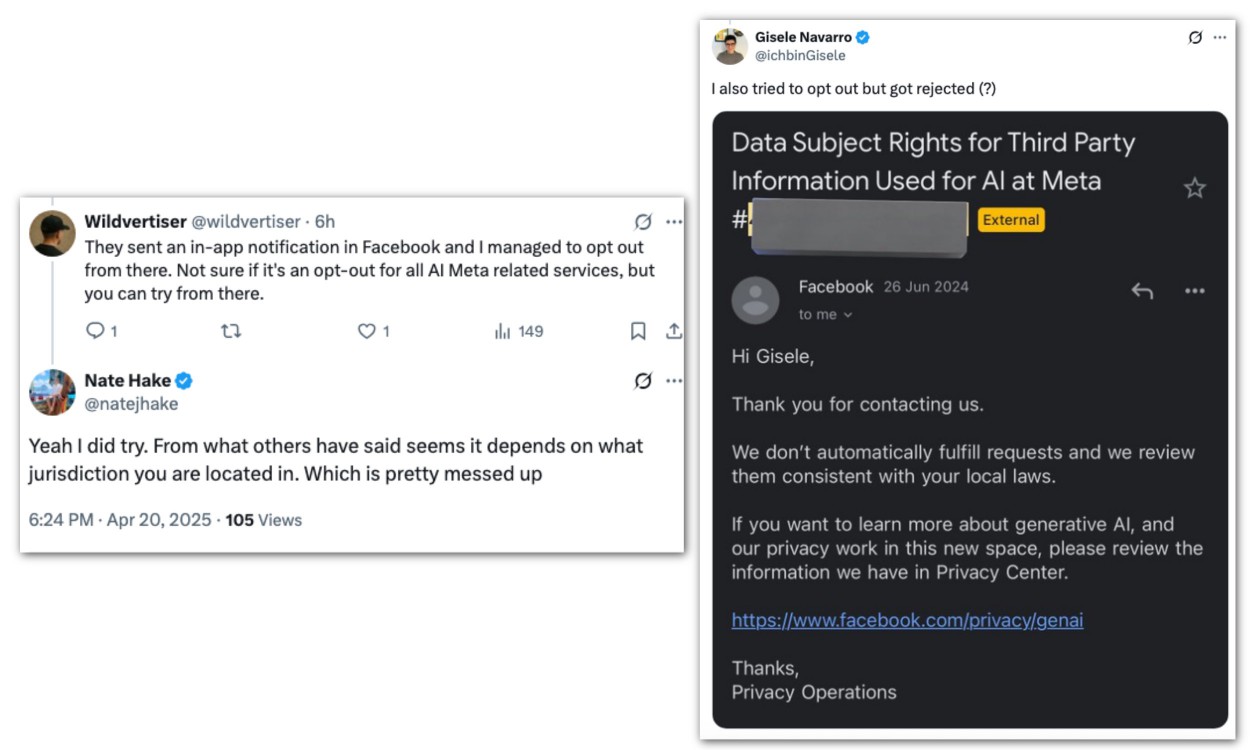
According to Hake, the opt-out link provided by Meta is not working. Multiple users responding to his post also mentioned a similar situation, lambasting Meta for its shady conduct. It isn’t clear whether the non-responsive opt-out form is a glitch, or otherwise.
Hake, however, points out the sheer disregard for user choice and the apparent U-turn by the company. Meta promised just over a week ago that it would “honor all objection forms we have already received, as well as newly submitted ones.”
As per Hake, when he reached out to Meta with the request and the opt-out form issue, the company executive replied that they wouldn’t take any further action regarding his request. Meta claims that it takes pride in its transparent approach towards using social content for AI training, but it seems that the company isn’t keeping an eye on whether it is executing those commitments fairly.

The Poetry Camera is an ingenious device that doesn’t take photos but instead makes poems.The clever contraption features a lens that observes its sur

The OpenAI team, led by Sam Altman, has finally unveiled GPT-5, with around 600,000 people watching the launch livestream either live or during the fi

As AI starts dominates the technology landscape, it becomes more and more appealing to give the software a try, however it can be somewhat intimidatin

What’s happened? Geoffrey Hinton, known as the “godfather of AI,” told the Ai4 conference that making AI “submissive” is a losing strategy and propose

Microsoft has just introduced a new Surface Pro tablet. Touted to be the thinnest and lightest Copilot+ PC on the market. The tablet is merely 7.8 mm
Android devices have offered a built-in screen reader feature called TalkBack for years. It helps people with vision problems to make sense of what ap

If you’ve been dreaming about having a more in-depth conversation with one of your favorite gaming characters, it seems that Sony is working on making

Apple’s progress with bringing AI to its hardware hasn’t exactly hit the same notes as the progress it has made with computing and wearable endeavors.
We are a comprehensive and trusted information platform dedicated to delivering high-quality content across a wide range of topics, including society, technology, business, health, culture, and entertainment.
From breaking news to in-depth reports, we adhere to the principles of accuracy and diverse perspectives, helping readers find clarity and reliability in today’s fast-paced information landscape.
Our goal is to be a dependable source of knowledge for every reader—making information not only accessible but truly trustworthy. Looking ahead, we will continue to enhance our content and services, connecting the world and delivering value.